
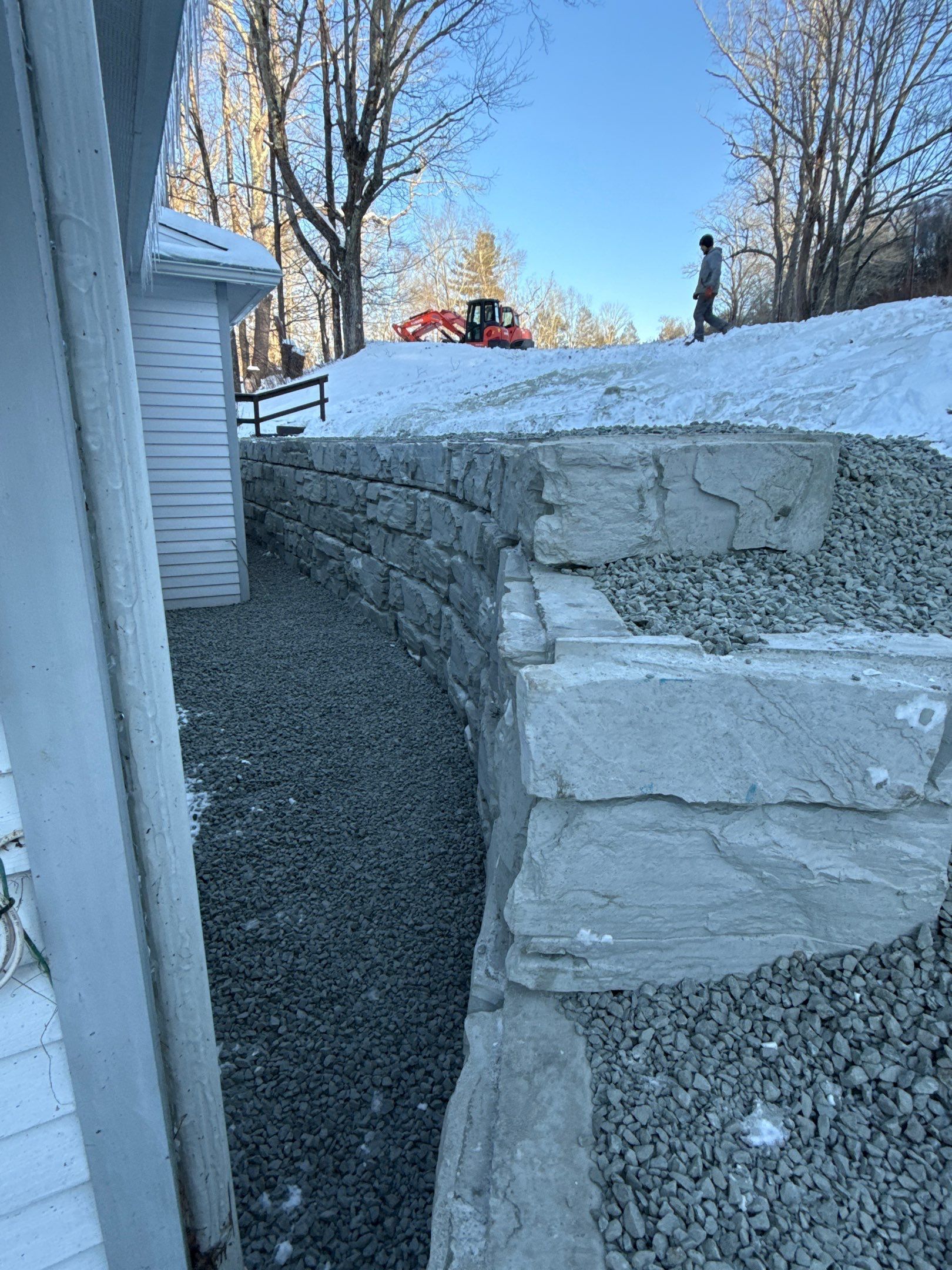
Foundations Engineered for Structural Loads
Concrete & Foundation Work in Honesdale and nearby towns for homes, garages, and outbuildings requiring durable support systems and long-term structural performance
Frost depth in the Northern Poconos reaches forty-two inches, which means foundation footings must extend below that level to prevent heaving and settling as ground freezes and thaws seasonally. A trusted contractor pours foundations, slabs, footings, and structural concrete for residential and accessory buildings throughout the Upper Delaware River Valley, coordinating excavation depth, reinforcement placement, and concrete specifications with building loads and soil bearing capacity. Foundation walls supporting structures require different design than garage slabs or shed footings, and each application involves specific preparation and installation steps that affect long-term performance.
Foundation work begins with excavation to required depth, compacted aggregate base installation, formwork construction, and reinforcement placement before concrete arrives. Footings distribute building weight across soil, foundation walls transfer loads from above to footings below, and slabs provide level surfaces while resisting ground moisture and supporting point loads. Concrete mix specifications vary based on whether the application involves structural support, exterior exposure, or slab-on-grade construction.
Discuss foundation or concrete project needs to determine design requirements and construction approach for your building plans.
What Changes After Foundation Installation
Proper foundation construction includes subsurface drainage installed during backfilling to direct water away from walls, preventing hydrostatic pressure and moisture infiltration that cause basement dampness and structural stress. Grading around completed foundations slopes away from structures, and concrete cures to full strength over weeks following placement. Reinforcement embedded in concrete controls cracking from shrinkage and thermal movement, with rebar positioned according to engineering specifications for walls supporting building loads.
You'll notice level surfaces ready for framing or finishing work, no settling or movement as structures bear down on foundations, and dry interior spaces protected from ground moisture. Foundations poured with attention to depth, drainage, and reinforcement handle freeze-thaw cycles without heaving, support building loads without cracking or deflection, and provide stable platforms that don't require releveling or structural intervention years after construction.
Foundation projects coordinate with site preparation including excavation access, soil removal and disposal, utility planning, and drainage integration. Concrete work for driveways, patios, and walkways involves different thickness and reinforcement than structural applications but requires similar attention to base preparation, control joint placement, and surface finishing that affects durability and appearance over decades of use and weather exposure.
Common Questions About This Service
Foundation and concrete decisions affect building performance, longevity, and functionality in ways that aren't easily corrected after construction, making upfront planning critical.
What preparation does foundation work require?
Excavation removes soil to specified depth below frost line, base material is placed and compacted to create stable subgrade, formwork establishes foundation dimensions and holds concrete during placement, and reinforcement is positioned according to structural requirements before concrete delivery and pouring begins.
How do foundations handle frost and ground movement in Milanville?
Footings placed below frost depth rest on stable soil unaffected by seasonal freezing, subsurface drainage removes water that would expand when frozen, and foundation walls anchored to footings resist lateral pressure from backfill and frost action attempting to push walls inward.
When does a project require engineered foundation design?
Buildings exceeding standard residential dimensions, structures on sloped sites where uneven bearing occurs, accessory buildings housing heavy equipment or storage loads, and any construction on soils with low bearing capacity or high water tables all benefit from engineering that calculates required footing size, wall thickness, and reinforcement specifications.
What distinguishes foundation concrete from slab concrete?
Foundation walls bear building loads and resist lateral soil pressure requiring higher strength concrete and vertical reinforcement, while slabs primarily resist ground moisture and support distributed loads with different thickness, reinforcement patterns, and finishing requirements based on intended use.
Why does base preparation matter as much as the concrete itself?
Unstable or improperly compacted base material settles unevenly causing concrete to crack and shift, poorly draining bases allow water accumulation that undermines support, and inadequate thickness or improper aggregate size reduces load distribution, making the base layer critical to long-term performance regardless of concrete quality.
For Him Contracting coordinates foundation and concrete work with excavation, drainage, and site preparation services to address all aspects of structural installation. Contact our team to review building plans, site conditions, and foundation specifications for your construction project.