
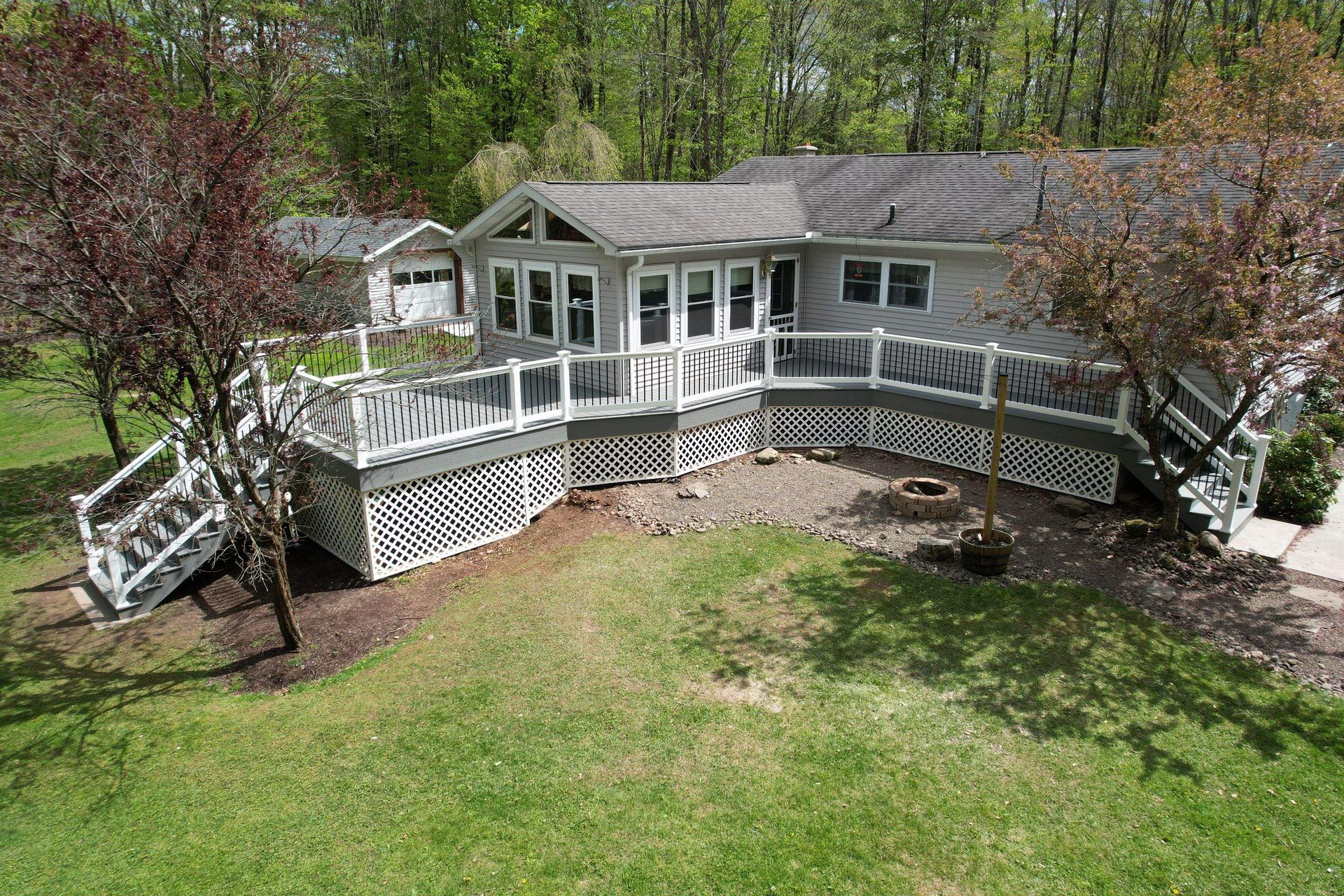
Outdoor Spaces Built for Structural Longevity
Deck Construction in Honesdale and the nearby area for properties needing durable outdoor entertaining and dining areas
Wood and composite decking materials offer different maintenance requirements and lifespan expectations, with pressure-treated lumber requiring periodic sealing and staining while composite materials resist rot and fading without regular treatment. For Him Contracting builds custom decks for residential properties, with designs that include multi-level layouts, stair systems, railing configurations, and built-in features like benches or planters. Deck construction begins with foundation work using concrete footings set below frost depth, followed by beam and joist framing that supports the decking surface, and finishes with railings and stairs that meet code height and spacing requirements.
Structural integrity depends on proper footing depth, joist spacing, and ledger board attachment to the home's existing structure. Decks attached to homes must be anchored with lag bolts or structural screws that penetrate into solid framing, with flashing installed to prevent water from seeping behind the ledger and rotting the house's rim joist. Freestanding decks use perimeter beams supported by multiple footings, eliminating attachment concerns but requiring additional foundation work.
Discuss deck design ideas and pricing during a consultation to review layout options that complement your home and landscape.
What Proper Deck Framing Requires
Joist spacing is determined by the decking material—most wood decking requires joists every sixteen inches, while some composite products allow twenty-four-inch spacing due to increased rigidity. Beam sizing depends on span length and load requirements, with larger beams needed for decks that accommodate hot tubs or heavy planters. Blocking between joists prevents twisting and adds rigidity, especially on decks with long joist spans.
After construction, you'll have a stable outdoor surface that doesn't bounce or flex underfoot, with railings that meet code requirements for height and baluster spacing. Stairs provide safe transitions to ground level or between deck levels, with treads and risers sized for comfortable use. Composite decks maintain their appearance without annual staining, while properly sealed wood decks develop a weathered patina or retain their original color depending on maintenance preferences.
Customization options include railing styles that match home architecture, built-in seating that defines entertaining areas, and lighting integrated into posts or stair risers for evening use. Multi-level decks create distinct zones for dining, lounging, and cooking, with stairs connecting levels and providing visual interest on sloped lots.
Answers to Frequent Service Questions
Deck projects involve material trade-offs and structural decisions that affect both upfront cost and long-term maintenance requirements.
What decking material lasts longest with minimal maintenance?
Composite decking resists rot, insect damage, and UV fading without sealing or staining, typically lasting twenty-five years or more, while pressure-treated wood requires sealing every two to three years but costs significantly less upfront.
How deep do deck footings need to be in Milanville?
Footings must extend below the frost line, typically forty-two to forty-eight inches deep in The Northern Poconos, to prevent frost heaving that lifts and shifts the deck structure during freeze-thaw cycles.
What's involved in attaching a deck to an existing home?
A ledger board is bolted to the house's rim joist using lag screws or structural fasteners spaced according to code, installed above the ledger to direct water away from the connection point and prevent moisture infiltration that rots framing.
How do you determine railing and stair requirements?
Building codes specify minimum railing height of thirty-six inches for decks more than thirty inches above grade, with balusters spaced so a four-inch sphere cannot pass through, and stair risers must be consistent in height with treads at least ten inches deep.
Can deck layouts accommodate sloped yards?
Multi-level decks work well on slopes, with each level stepping down the grade and supported by footings at different elevations, eliminating the need for extensive grading while creating distinct outdoor zones connected by stairs.
For Him Contracting designs decks customized to property conditions, homeowner preferences for entertaining and dining, and budget considerations for materials and features. Schedule an on-site visit to review your yard's slope and discuss deck configurations that maximize usable outdoor space.