Outdoor Surfaces Built for Continuous Use
Hardscaping & Retaining Walls in Honesdale and the nearby area for properties managing elevation changes, expanding outdoor function, or controlling slope erosion
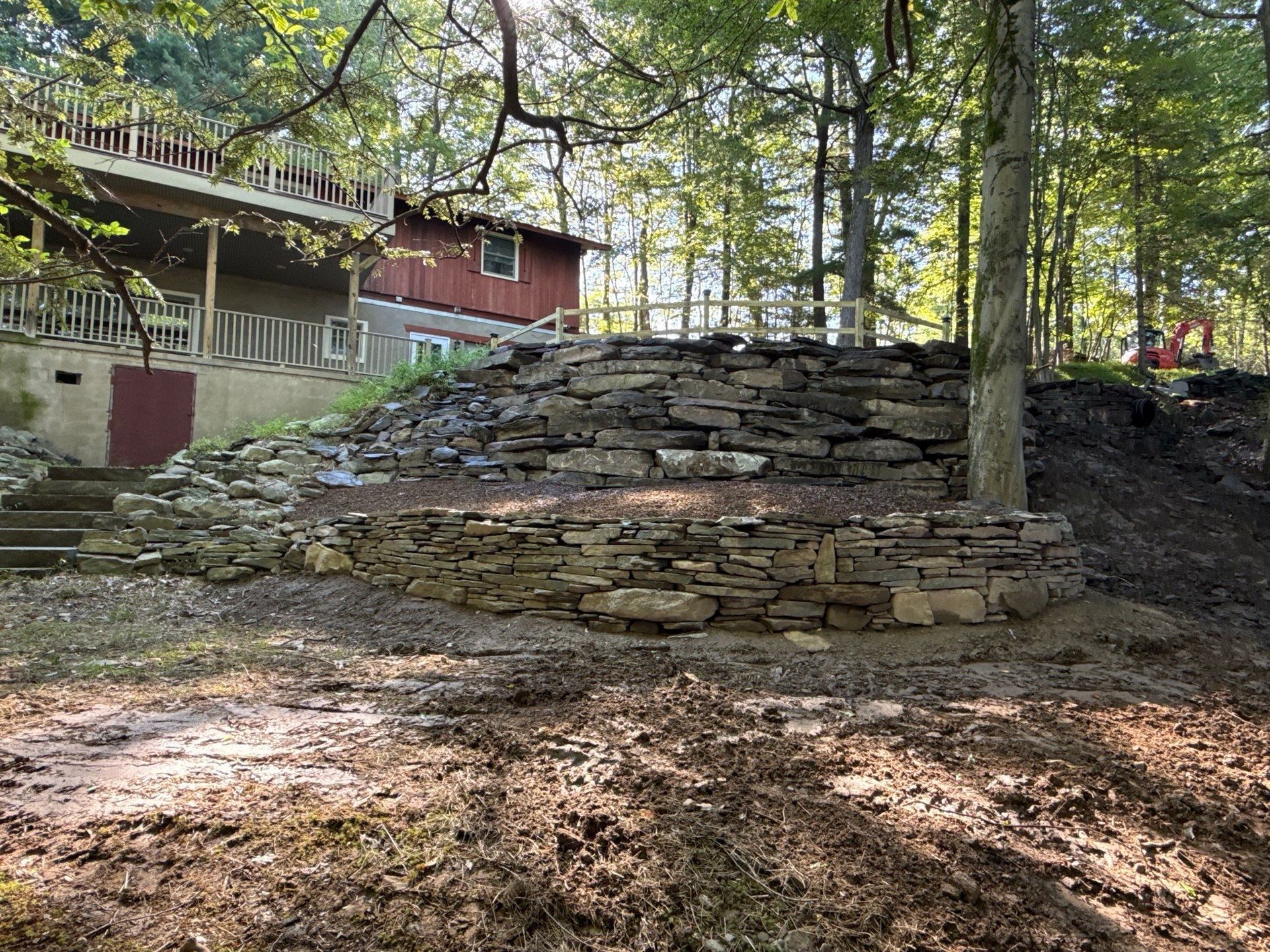
Retaining walls hold back soil on sloped properties, creating level areas for patios, walkways, or lawns where terrain otherwise prevents functional outdoor space. For Him Contracting builds hardscape features and retaining walls throughout the Upper Delaware River Valley, using stone, pavers, and engineered block systems designed for both structural performance and long-term durability. Walls taller than three feet generate significant lateral soil pressure requiring proper drainage behind the wall, adequate base preparation, and construction techniques that prevent leaning or failure as backfill settles and seasonal freeze-thaw cycles apply stress.
Hardscaping installation begins with excavation and base preparation that determines whether surfaces remain level and stable over decades of use. Paver patios and walkways require compacted aggregate base, edge restraint preventing lateral movement, and bedding sand creating a level setting surface. Retaining walls need stable footings below frost depth, drainage systems directing water away from backfill, and construction that accounts for soil type and retained height when calculating required wall mass and reinforcement.
Schedule a site consultation to evaluate terrain, discuss design possibilities, and determine construction requirements for hardscape features.
What Hardscaping Actually Accomplishes
Properly constructed hardscaping withstands weather exposure, ground movement, and continuous use without settling, heaving, or surface deterioration. Retaining walls include subsurface drainage using perforated pipe and gravel backfill that prevents water pressure from building behind the wall, which is the primary cause of wall failure and leaning. Paver systems use interlocking units and edge restraint that distribute loads and prevent individual pavers from shifting, while base layers compact to density specifications that resist settling even under vehicle traffic.
After installation, outdoor areas become usable regardless of ground conditions, walking surfaces remain level without tripping hazards, and sloped yards transform into terraced spaces with defined elevation changes. Retaining walls stop erosion that previously washed soil downslope during storms, and hardscaped areas drain properly without puddling because installation includes grading and subsurface drainage integrated into base construction.
Material selection affects appearance, longevity, and maintenance requirements, with natural stone offering irregular aesthetics and long lifespan, pavers providing uniform patterns and easy individual replacement, and engineered block systems delivering structural capacity for taller walls. Projects often integrate with broader landscape improvements, drainage solutions, and outdoor living space development, with hardscaping providing defined areas for furniture, grilling, fire features, or recreational use that wasn't practical on unimproved ground.
Questions Before Starting Your Project
Hardscaping and retaining wall decisions involve understanding how materials, construction methods, and site conditions interact to produce functional outdoor spaces.
What preparation does foundation work require?
Footings placed below frost depth prevent heaving, drainage systems behind walls eliminate water pressure that causes leaning, proper backfill compaction reduces settling, and wall mass or reinforcement appropriate to retained height resists soil pressure attempting to push the wall forward.
How do paver systems differ from poured concrete?
Pavers flex slightly with ground movement without cracking, individual units can be removed and reset if settling occurs, and interlocking designs distribute loads across multiple pieces, while poured concrete forms monolithic surfaces that crack when underlying support shifts or freeze-thaw movement occurs.
When should hardscaping integrate with drainage improvements?
Properties with standing water, runoff crossing planned hardscape areas, or slope directing water toward structures all require drainage solutions installed during base preparation, using the excavation and grading already happening for hardscape construction to address water management simultaneously.
What base preparation do different hardscape features require in the Northern Poconos?
Patios and walkways need four to six inches of compacted aggregate depending on soil and expected loads, driveways supporting vehicles require deeper base and sometimes geotextile reinforcement in soft soils, and retaining walls need excavated footings and drainage systems that extend below frost depth common to Milanville winters.
Why does base preparation matter as much as the concrete itself?
Inadequate base depth or improper compaction allows settling, missing or insufficient edge restraint lets pavers spread and shift, poor drainage causes base erosion undermining support, and skipping bedding sand creates uneven surfaces where pavers rock under load and work loose over time.
For Him Contracting designs hardscaping to match site conditions, integrating retaining walls with drainage and landscape improvements for comprehensive outdoor functionality. Arrange an evaluation to discuss materials, layout options, and construction methods suited to your property's terrain and intended use.