
Systems That Function Reliably for Decades
Septic System Installation & Repair in Honesdale and the surrounding towns for properties with aging infrastructure or new construction requiring site-specific system design
For Him Contracting installs and repairs septic systems across Honesdale and the Upper Delaware River Valley, addressing both failing systems and new construction requirements. If your current system shows signs of backup, slow drainage, or surfacing effluent, or if you're preparing to build where municipal sewer access isn't available, a properly designed septic system becomes the foundation of functional water management. Soil composition, seasonal water tables, and slope conditions throughout the Northern Poconos determine whether a conventional gravity system works or if alternative drain field designs become necessary.
Septic system work begins with site evaluation and percolation testing to measure how quickly soil absorbs water, which directly determines drain field size and configuration. Tank placement accounts for access requirements, distance from structures and water sources, and elevation relative to the drain field. For repairs, troubleshooting identifies whether problems originate from tank damage, drain field saturation, distribution box failure, or inlet and outlet baffle deterioration. Each component functions as part of a complete system where one failure point affects overall performance.
Schedule a septic consultation to evaluate site conditions and system requirements specific to your property layout.
What Proper Septic Installation Requires
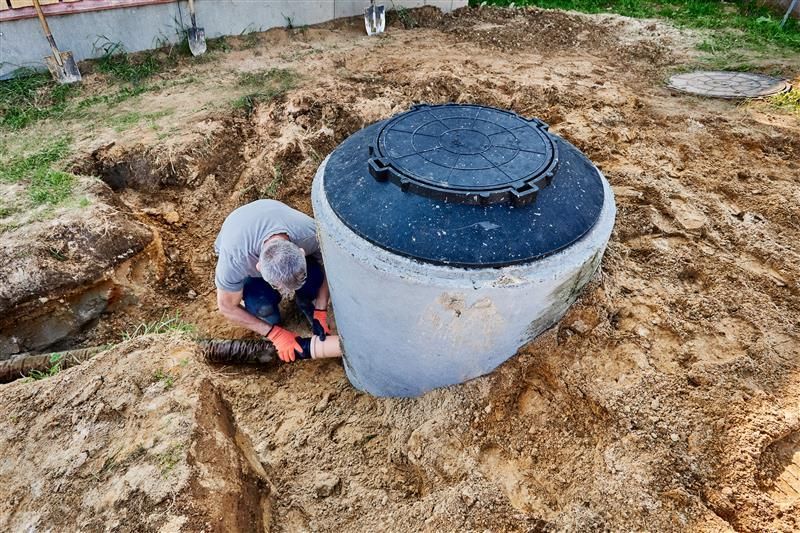
Installation involves excavation coordinated with site topography, tank and distribution box placement at calculated depths and distances, and drain field construction using specified aggregate and pipe configurations. Perc testing results determine whether standard trench systems, bed systems, or alternative technologies meet absorption requirements. For Him Contracting coordinates excavation and site preparation services to address grading, access routes, and soil conditions before system components arrive.
Once a system operates correctly, wastewater separates in the tank with solids settling and effluent flowing to the drain field where soil naturally filters contaminants. You'll notice consistent drainage from all fixtures, no surfacing water or odors near the drain field, and no backup during typical household use. Systems sized and installed according to soil conditions and household load handle daily wastewater volume without strain, and proper tank depth prevents freezing issues during Northern Poconos winters when frost penetration reaches several feet.
Replacement work includes removal of failed components, updated system design meeting current standards, and inspections verifying compliance with local requirements. Aging systems often fail due to drain field saturation from decades of use, tree root intrusion damaging tanks and pipes, or undersized original designs that no longer match household water use patterns.
What Property Owners Usually Ask
Septic system decisions affect long-term property functionality and require understanding of how site conditions, system design, and maintenance expectations interact.
What determines whether a property can support a septic system?
Percolation testing measures soil absorption rates, and site evaluations assess slope, water table depth, setback distances from wells and property lines, and available area for drain field installation, with clay-heavy soils common in parts of the Upper Delaware River Valley sometimes requiring larger drain fields or alternative system designs.
How does a septic system handle wastewater differently than municipal sewer?
Wastewater enters the septic tank where solids settle and separate, partially treated effluent flows to the drain field through distribution pipes, and soil microbes break down remaining contaminants as water percolates downward, making the drain field a critical biological treatment component rather than just a disposal area.
When should an existing system be repaired versus replaced?
Repairs address specific component failures such as damaged tank baffles, clogged distribution boxes, or broken pipes, while replacement becomes necessary when drain fields no longer absorb effluent due to biomat buildup or soil saturation, or when tanks show structural failure that compromises separation processes.
What site preparation does septic installation require?
Excavation creates access routes for equipment, removes unsuitable soil and replaces it with specified aggregate in drain field areas, establishes grades directing surface water away from system components, and stages tank and pipe delivery to coordinate with inspection schedules.
Why do some systems fail prematurely?
Undersized designs that don't match household wastewater volume, lack of regular tank pumping allowing solids to reach the drain field, harsh chemical use killing beneficial bacteria, and surface water or roof runoff directed into the system all shorten functional lifespan by overloading treatment capacity or saturating drain fields.
For Him Contracting evaluates site-specific conditions to recommend septic solutions that match soil characteristics, property layout, and long-term performance requirements. Request a property assessment to determine system options and installation specifications for your Milanville location.